Last Updated on August 7, 2026 by Tanya
Whether you’re fully vegan, mostly plant-based, or just cooking for someone who is, this vegan substitutes guide covers the swaps that actually work — no compromise on taste or texture. From eggs and dairy to honey and gelatin, here’s exactly what to use, how much, and when. Bookmark this one; you’ll come back to it often.
Egg substitutes
Eggs do different jobs in different recipes — binding, leavening, adding moisture — so the best substitute depends on what the egg is doing.
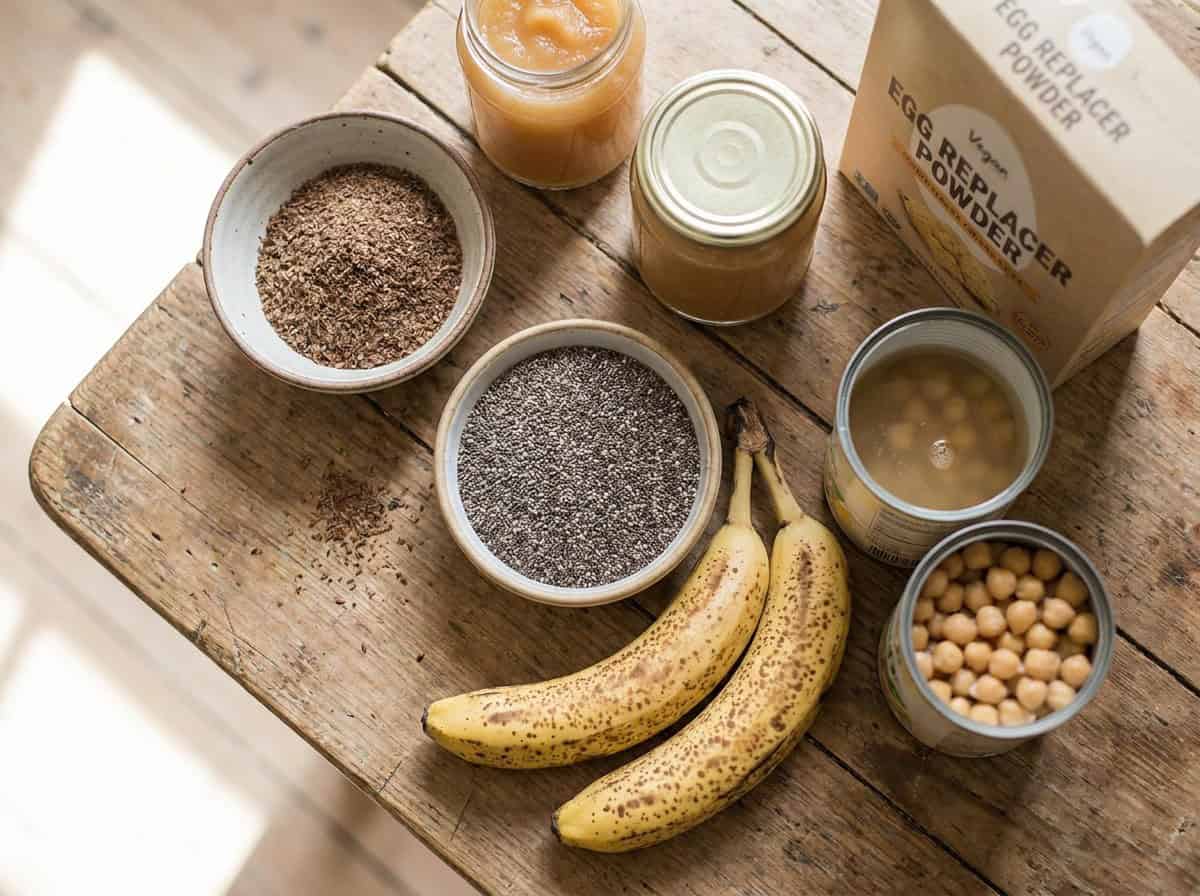
- Flax egg (binding, baked goods): 1 tablespoon ground flaxseed + 3 tablespoons water, rested for 5 minutes until gel-like. Replaces 1 egg.
- Chia egg: same ratio as flax, slightly less binding power but works well in pancakes and muffins.
- Mashed banana or applesauce (moisture, sweetness): ¼ cup replaces 1 egg — best in cakes, brownies, and quick breads where a hint of flavour is welcome.
- Aquafaba (the liquid from a can of chickpeas): 3 tablespoons replaces 1 egg, and it whips into stiff peaks — ideal for meringues or mousses.
- Commercial egg replacer: follow packet instructions — most reliable for delicate bakes like sponge cakes.
If you’re in the US, Just Egg (made primarily from mung bean protein) is widely considered the best liquid egg replacement available — it scrambles, sets, and even tastes remarkably close to real egg, making it ideal for scrambles, omelettes, and quiches. You can also try my vegan mung bean omelette recipe here!
Dairy milk substitutes
Plant milks aren’t interchangeable — each has a different fat content and flavour, so the right choice depends on the recipe.
- Oat milk: closest to full-fat dairy in texture, great for coffee, baking, and creamy sauces.
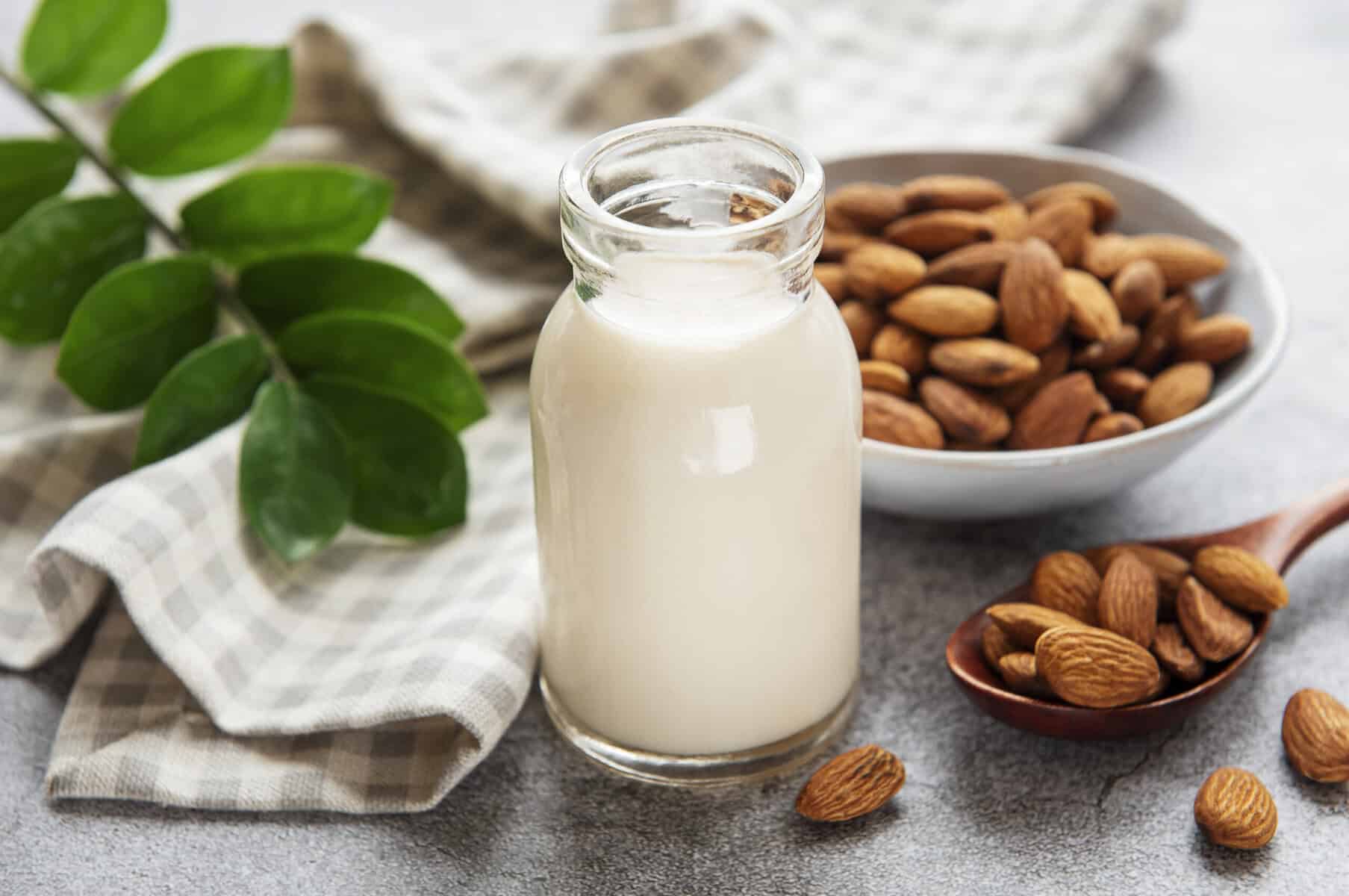
- Almond milk: light and slightly nutty, best for smoothies and cereal rather than cooking, as it can separate when heated.
- Soy milk: high in protein and froths well, making it the best choice for vegan lattes and cappuccinos.
- Coconut milk (full-fat, from a can): rich and thick, ideal for curries, soups, and desserts where richness matters.
- If you’d rather make your own, my creamy nut milk recipe takes minutes and works with almost any nut!
A quick note on using dairy-free milk in coffee: if you’re adding any plant milk to hot coffee, look for one labelled “barista” or “barista blend” — these are formulated with extra fat and stabilisers so they froth and steam properly without splitting. Regular versions of oat, soy, or almond milk can curdle or look thin in espresso, so it’s worth keeping a barista blend on hand specifically for coffee, and a regular version for cereal, baking, and sauces.
Butter substitutes
- Vegan block butter (e.g. Nuttelex, Flora): 1:1 swap for baking, frying, and spreading — the most reliable all-rounder.
- Coconut oil: 1:1 swap in baking, but adds a subtle coconut flavour — best in recipes where that complements the other flavours.
- Olive oil: works for savoury cooking and sautéing, but isn’t a direct substitute in baked goods that rely on butter’s solid structure.
Cheese substitutes
Cheese is one of the trickiest things to replace (but not impossible!). “Cheese” covers such different textures and uses — melting, grating, spreading, and crumbling all need different approaches.
- Cashew-based soft cheese: blend soaked cashews with nutritional yeast, lemon juice, and salt for a spreadable, creamy cheese alternative. My cashew ricotta uses this exact base. Perfect for spreading on toast!
- Melting cheese (for pizza, toasties, bakes): store-bought vegan cheese (e.g. Bega, Violife) is the most reliable option — look for ones labelled “meltable,” as some vegan cheeses stay firm under heat.
- Nutritional yeast: adds a savoury, cheesy flavour to sauces, popcorn, and pasta — a pantry essential for vegan cooking.
- Cream cheese: store-bought options (e.g. Tofutti) work well for bagels and cheesecake bases.
- Feta-style: pressed firm tofu marinated in a mix of lemon juice, olive oil, dried oregano, and salt for at least an hour develops a tangy, crumbly texture remarkably close to feta — great in salads.
Cream and yoghurt substitutes
- Coconut cream: chilled overnight, the solid part whips just like dairy cream — perfect for desserts and toppings.
- Cashew cream: soaked cashews blended with water until smooth, a neutral-tasting base for savoury sauces and soups.
- Coconut or soy yoghurt: both work well in baking and as a topping — coconut yoghurt is richer, soy yoghurt is closer to dairy in tang.
Honey substitutes
Honey is an animal product, so for a fully vegan swap, reach for:
- Maple syrup: 1:1 swap, with a slightly more pronounced flavour — works beautifully in baking and dressings.
- Agave syrup: neutral-tasting and slightly sweeter than honey, so use a little less.
- Date syrup: deep, caramel-like flavour — best in recipes where a richer taste is welcome, like granola or energy bars.
Curious why honey isn’t considered vegan in the first place? I broke it down in detail here.
Mayonnaise substitutes
Store-bought vegan mayo is now widely available and tastes remarkably close to the original. For a homemade version, blend silken tofu or aquafaba with oil, lemon juice, and mustard — it whips up creamy and tangy in minutes.
Gelatin substitutes
Agar agar, derived from seaweed, is the standard vegan replacement for gelatin. It sets firmer than gelatin, so start with about half the amount the recipe calls for, dissolve it in hot liquid, and adjust to reach the texture you want. It works well in jellies, panna cotta, and fruit-based desserts.
Meat substitutes
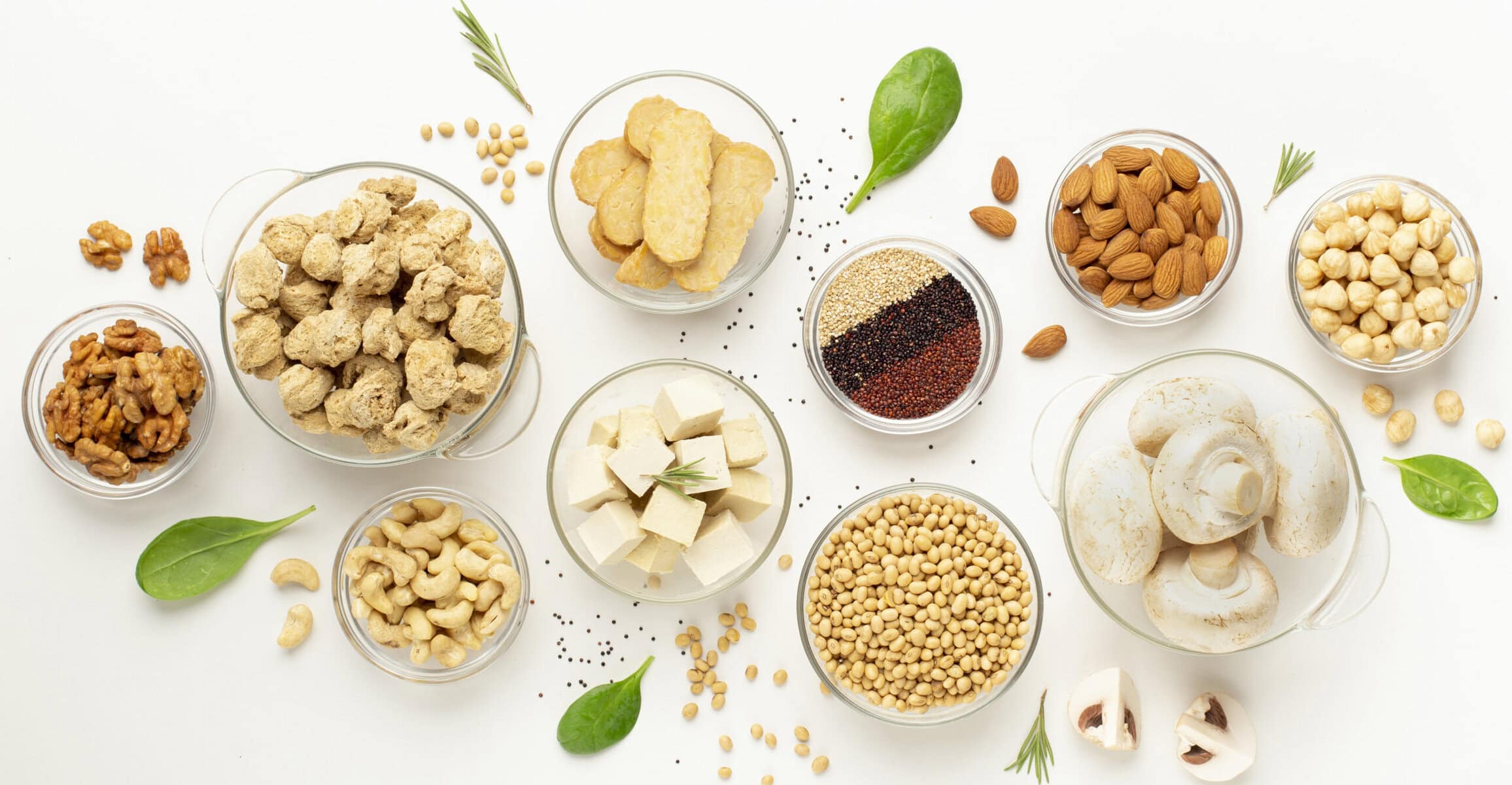
- Tempeh: firmer and naturally nutty, with a denser texture that holds up well in curries and sandwiches.
- Seitan: made from wheat gluten, it has a chewy, meat-like texture — great for slicing into ‘steaks’ or strips.
- Jackfruit (young, in brine): shreds easily and takes on flavour beautifully, making it ideal for ‘pulled’ dishes.
- Tofu: firm tofu absorbs marinades well and works in stir-fries, scrambles, and skewers — try my soy glazed tofu skewers for a simple introduction.
- Mushrooms (whole): portobello or king oyster mushrooms, grilled or roasted whole, have a satisfying “meaty” bite on their own — great as a burger patty alternative or sliced into fajitas.
- Lentils and mushrooms: a combination that creates a hearty, savoury base for bolognese, meatballs, and bakes — my vegan meatballs use exactly this approach.
If you’d rather skip the prep, the quality of commercial meat substitutes has improved enormously, and a few brands stand out:
- Beyond Meat: their burger patties and mince are widely available and cook almost identically to beef, including a similar “browning” appearance — great for burgers, tacos, and spaghetti bolognese.
- Impossible: known for its realistic texture and “bleed” when cooked, making it a favourite for burgers and meatballs where that meat-like quality matters most.
- THIS (UK): their “This Isn’t Chicken” and “This Isn’t Pork” ranges are consistently rated among the best for texture and flavour — the chicken pieces in particular hold up well in curries, stir-fries, and wraps without going mushy.
- Fable Pulled Shiitake Mushrooms : this is a fantastic product I use a lot in my cooking- these ‘pulled mushrooms’ have a naturally fibrous, shredded texture that’s ideal for tacos, bao buns, or bolognese — a great option if you want something closer to whole-food than highly processed.
Keep this guide handy — once you’ve got a few of these substitutes in your pantry, plant-based cooking starts to feel less like substitution and more like second nature.