Last Updated on August 7, 2026 by Tanya
One of the most common things I hear is that veganism is a modern trend — something recent, Western, and a little bit precious. A wellness fad with a hashtag.
I understand why it looks that way. The oat milk, the labels, the neat little “v” on a café menu — all of that is new. But the idea underneath it? Eating from the earth, treating animals with care, building whole cuisines around plants? That’s one of the oldest stories humans have, and it belongs to far more of the world than we usually give it credit for.
The word is young. The practice is ancient.
The word is new — the idea really isn’t
“Vegan” was only coined in 1944, when a small group in England split from the vegetarian society and needed a name for people who avoided all animal products, not just meat. “Vegetarian” itself only dates to the 1840s. Before that, people in the English-speaking world called a meat-free diet “the Pythagorean diet,” after the ancient Greek philosopher who taught his followers to abstain from eating animals more than two thousand years ago.
So the vocabulary is modern. The choice is not. Once you start looking, you find plant-centred eating woven into cultures on every continent — sometimes for spiritual reasons, sometimes ethical, sometimes simply because it was the food people had. Here are a few of my favourites.
Ital food, Jamaica
If you want proof that plant-based living isn’t a new invention, start with Ital.
Ital comes from the word “vital,” and it’s the way of eating followed by many Rastafari. The philosophy is that food should be natural, alive, and as close to the earth as possible — grown, not processed; whole, not tampered with. In its strictest form that means no meat, no processed food, and often no added salt, with many following it as a fully plant-based diet.
An Ital plate is beautiful: callaloo, ackee, plantain, coconut, ground provisions like yam and dasheen, beans and fresh vegetables cooked simply and seasoned with herbs, scotch bonnet and coconut milk. Practices vary from person to person, but at its heart Ital is a decades-old tradition of eating consciously and plant-first, rooted in respect for the body and the natural world.
Ethiopian and Eritrean fasting food
This might be the single strongest example in the world of an everyday vegan cuisine — and most people have never heard it framed that way.
Followers of the Ethiopian and Eritrean Orthodox Church observe well over a hundred fasting days a year, including every Wednesday and Friday plus long fasting seasons. On those days, no animal products are eaten at all — no meat, no dairy, no eggs. Over centuries, that practice built an entire culinary repertoire that happens to be completely vegan.
If you’ve ever shared a beyaynetu — that generous platter of little stews spooned onto spongy teff injera — you’ve eaten it: shiro (silky spiced chickpea stew), misir wot (red lentils warm with berbere), gomen (collard greens), cabbage and carrot and potato, all torn into with your hands. Nobody at that table is thinking of it as “vegan food.” It’s just the food. And it’s been that way far longer than any of our modern labels.
India and the ethics of ahimsa
India holds one of the oldest and largest vegetarian traditions on earth, grounded in the principle of ahimsa — non-harm toward living beings — which runs through Hindu, Buddhist and especially Jain thought going back thousands of years.
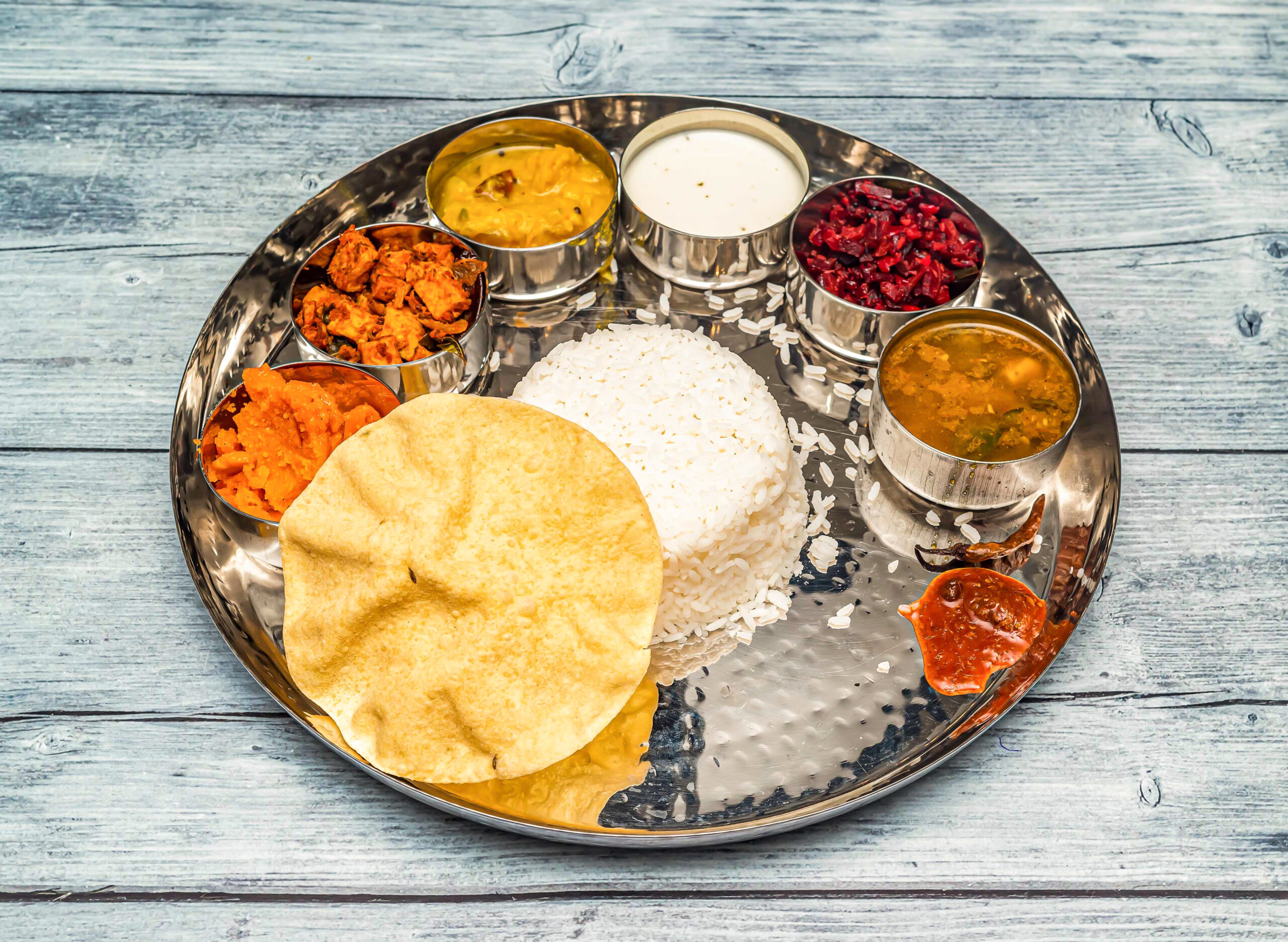
Here’s where honesty matters: much of this tradition is vegetarian rather than vegan, because dairy — ghee, yoghurt, paneer, milk — sits at the centre of a great deal of Indian cooking. So I won’t pretend a typical thali is vegan. But the ethical root is exactly the one modern veganism grew from: the belief that we shouldn’t cause unnecessary suffering to animals. Jain cuisine takes it furthest, avoiding not only all meat but often root vegetables like onion, garlic and potato, to avoid harming the small organisms and the whole plant in the soil. That’s a level of care about our impact on other living things that predates the word “vegan” by millennia.
Buddhist temple cuisine across East Asia
Walk into a Buddhist monastery kitchen in Korea, China or Japan and you’ll find a plant-based tradition refined over centuries.
Korean temple food (sachal eumsik), Chinese Buddhist cooking and Japanese shojin ryori all grew out of the monastic commitment to non-violence. The food is vegetable-forward, seasonal, and quietly ingenious — mushrooms, tofu, fermented pastes, wild greens, seaweed and grains coaxed into dishes so satisfying you don’t miss anything. Temple cooking is having a real moment with chefs and food writers now, but the monks have been doing it, unbothered, for a very long time.
The Levant and the Mediterranean
So much of what we eat from the eastern Mediterranean is naturally, effortlessly plant-based — no substitutions required.
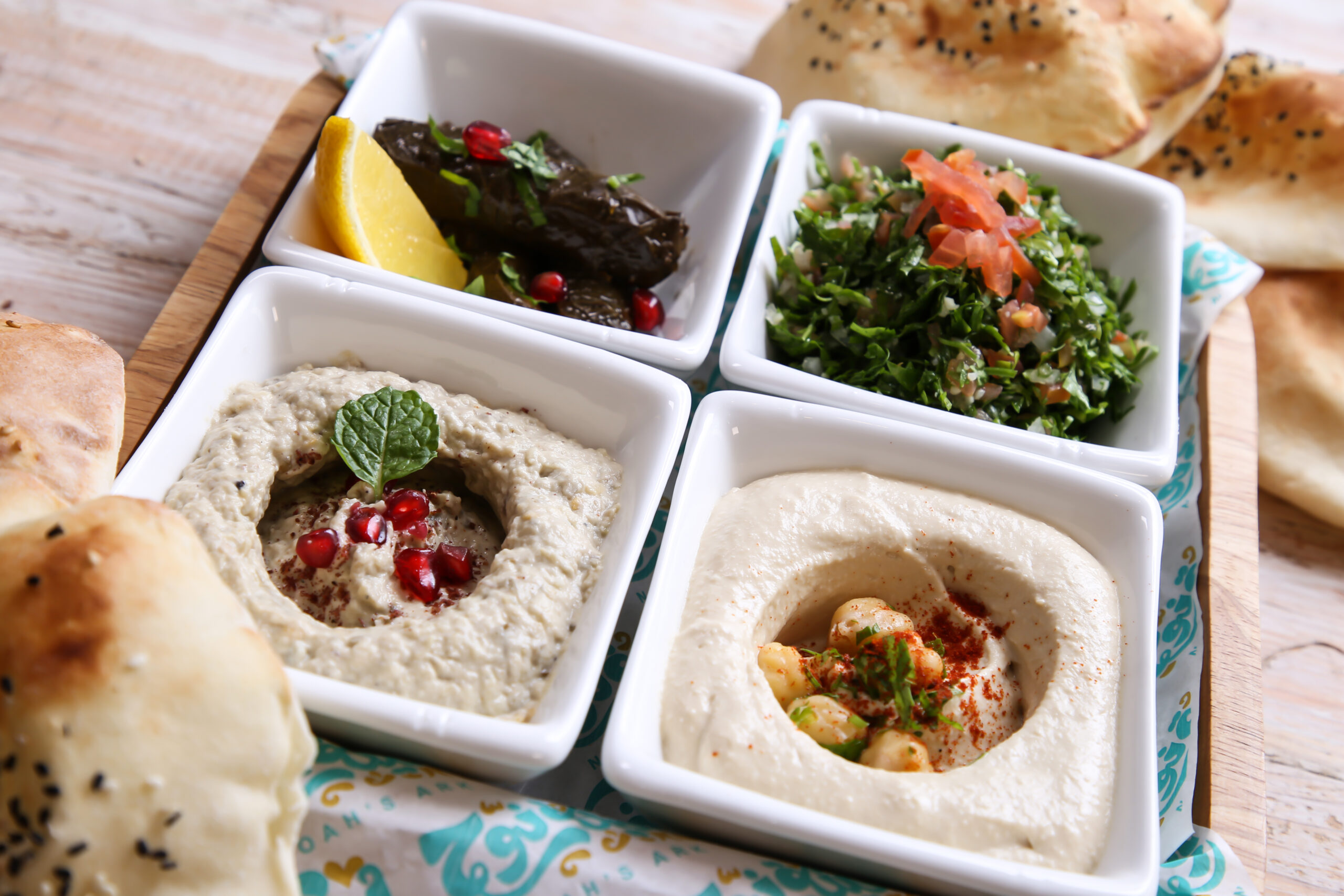
Hummus, ful medames, tabbouleh, baba ganoush, falafel, stuffed vine leaves, muhammara: a mezze spread can be almost entirely vegan without anyone deciding it should be. Layered on top of that, the Orthodox Christian communities of the region observe fasting periods much like the Ethiopian tradition, which produced their own body of Lenten cooking free of animal products. Between everyday staples and religious fasting, plant-based eating has been part of the fabric here for a very long time.
West Africa and the Mesoamerican milpa
Two more, from opposite sides of the world, both built on plants long before anyone was counting.
Across West Africa, the everyday foundation of many cuisines is plant-based: groundnut (peanut) stews, beans, plantain, yam, and richly cooked leafy greens, with meat and fish often playing a smaller or occasional role in daily home cooking. And in Mesoamerica, the ancient milpa system — corn, beans and squash grown together, the “three sisters” — gave Indigenous communities a nutritionally complete plant-based base thousands of years before European contact. Corn tortillas, beans, squash, nopales, tomatoes and chiles: a whole way of eating rooted in the ground.
An honest note
I want to be careful here, because it would be easy to overstate this. Not all of these traditions are vegan in the way we use the word today. Some include dairy. Some include the occasional fish or feast-day meat. And some plant-based eating came not from ethics but from economics — plants were simply what people could grow and afford.
But that doesn’t weaken the point. If anything, it makes it richer. Plant-centred eating, and a genuine reverence for animals and the earth, shows up again and again across time, faith and geography. It is not a Western invention. It is not a 2015 wellness trend. And the case for plant-based eating isn’t just historical or cultural — it’s more urgent than ever. I dug into why going vegan now matters more than ever, backed by the environmental data.
We’re not inventing something new
When you choose to eat this way today, you’re not stepping outside of tradition — you’re stepping back into a very old, very global one. You’re joining Rastafari elders and Ethiopian grandmothers, Jain families and Buddhist monks, milpa farmers and mezze tables stretching back centuries.
The word “vegan” is only a few decades old. The heart of it is as old as we are.