Last Updated on August 9, 2026 by Tanya
You’ve ordered an oat latte, watched it split into pale curds the second it hit the espresso, and stood there wondering what went wrong. Or you’ve tried steaming almond milk at home and ended up with watery foam that collapsed before you’d even finished pouring. It happens more than it should, because not every plant-based milk is actually built for coffee.
If you’re trying to work out the best plant-based milk for coffee in Australia, the honest answer is: it depends on what you’re making and how fussy you are about your foam. But if you just want the short version — my personal recommendation is’ Boring Barista Oat Milk’, and I’ll get to why. First, it’s worth understanding why plant milk and espresso can be such an awkward pairing in the first place.

Why plant milk and espresso don’t always get along
The acidity problem most people overlook. Fresh espresso sits at around pH 4.5–5.1, which is genuinely acidic. Plant milks are much less acidic than that, and when a cold, acidic shot meets warm plant milk (or vice versa), the proteins can destabilise and the milk separates. Light roasts make this worse, since they retain more of the coffee’s natural acids than medium or dark roasts — so if you’re a light-roast, single-origin drinker, you’ll need to be a bit more deliberate about both your milk and your technique.
Temperature is the other culprit. Most plant milks start losing heat stability around 60–65°C, and anything steamed hotter than that is at real risk of splitting, especially against acidic espresso. This is also exactly why “barista edition” milks exist. They’re formulated with emulsifiers, gums or oils specifically to hold together at higher steaming temperatures — it’s a real formulation difference, not just marketing, and it’s the main reason a barista oat milk behaves completely differently to the standard carton next to it on the shelf.
My top pick: Boring Barista Oat Milk
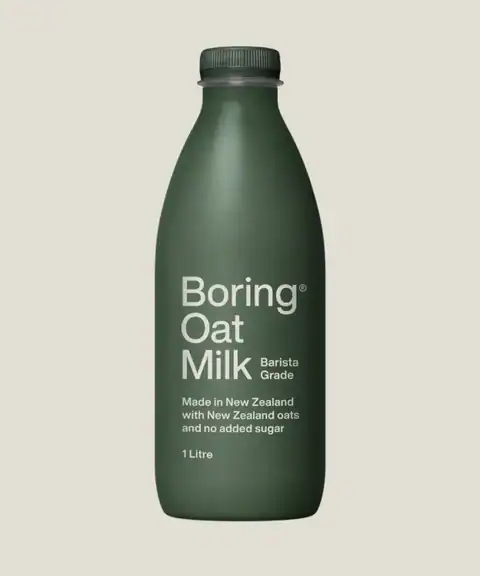
If you only take one thing from this guide, make it this: skip standard oat milk and go straight for a barista blend, and the brand ‘Boring’ is my personal recommendation.
Boring is a New Zealand oat milk brand, made in Hawke’s Bay from South Island oats, with sunflower oil from Canterbury and sea salt from Marlborough — so the whole thing is sourced and made close to home rather than shipped in from Europe. The barista version is deliberately simple: oats, water, sunflower oil, minerals and vitamins, with no added sugar, thickeners or gums. It steams into a silky microfoam, doesn’t fight the espresso for attention, and holds its texture right down to the last sip. It’s stocked nationwide at Woolworths in Australia, in a clear, recyclable bottle, which is a nice bonus if you’re trying to keep your kitchen waste down.
It’s not the only good option out there, so here’s how the rest of the field compares.
Oat vs soy: the two café standards
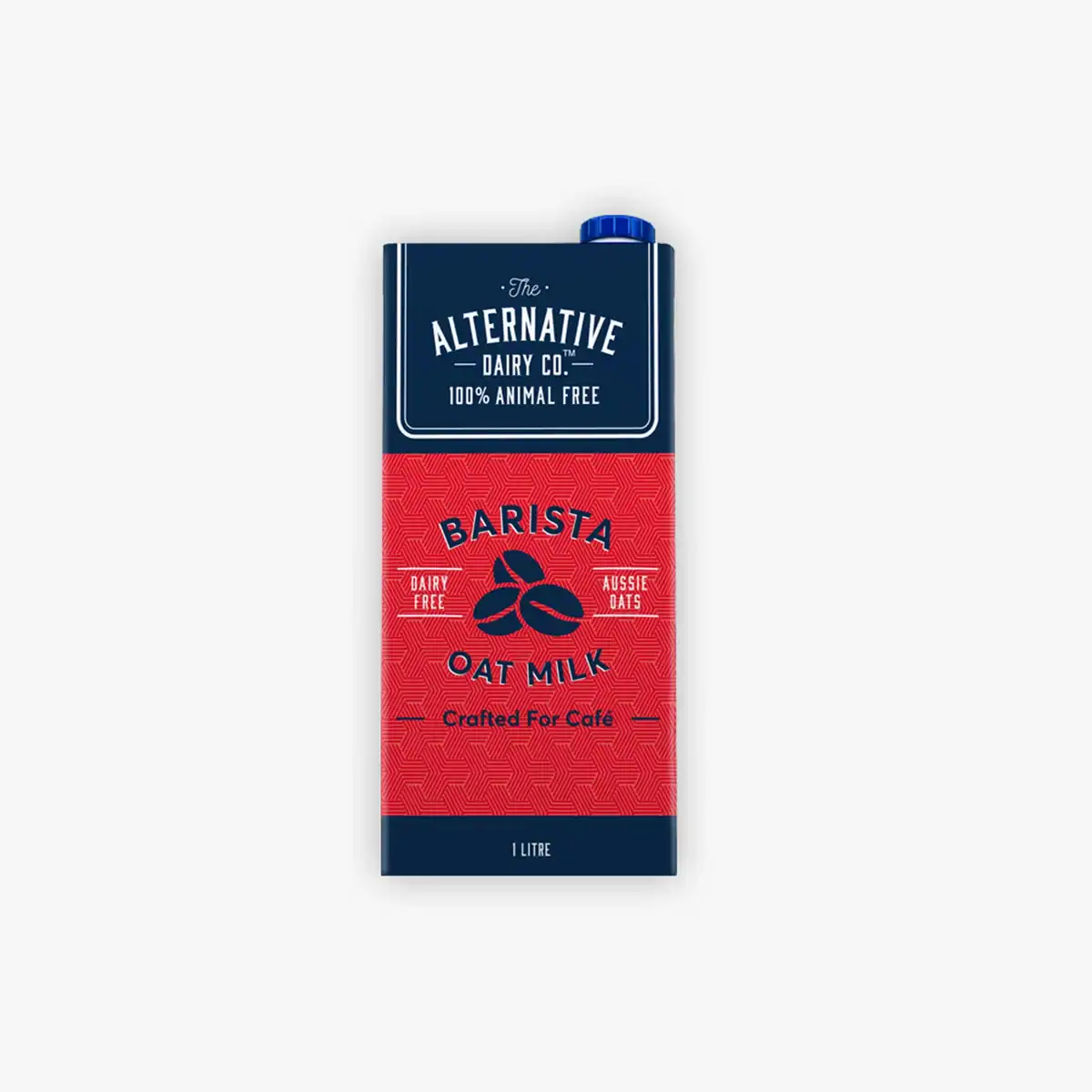
Oat milk is what most Australian baristas reach for on a flat white or latte, and for good reason — it has a neutral, lightly sweet flavour that complements espresso rather than competing with it, plus strong microfoam capacity and reliable heat stability in a barista formula. Alongside Boring, Alternative Dairy Co Barista Oat, Califia Farms Oat Barista Blend, Oatly Barista Edition and Australia’s Own Barista Oat Milk are all widely stocked and well-regarded. It’s worth knowing that “barista oat milk” isn’t one uniform product, though — these brands aren’t interchangeable. They vary noticeably in thickness (Oatly tends to pour thicker and creamier, closer to full-cream dairy, while others run lighter) and in flavour, from more neutral to more distinctly “oaty.” That flavour difference genuinely changes how the coffee underneath tastes, so it’s worth trying a few barista brands side by side to find the one that actually suits your palate and your usual order, rather than assuming any barista blend will do.
Soy milk was the original café plant milk, and it still performs beautifully in steaming tests. It produces the finest, most stable microfoam of any plant milk — smaller bubbles, slower collapse — which latte-art fans will appreciate, and it leads all plant milks on natural protein content. The trade-off is a noticeable beany background flavour in milder espresso, and it curdles faster than oat once temperatures creep past 55–60°C. Australia’s Own Barista Soy is a solid, widely available option if you want the closest match to how dairy behaves under steam.
Almond, macadamia and coconut: where flavour meets limitation
Almond milk has a pleasant, nutty flavour that works well in iced lattes and cold brew, but its frothing is the weakest of the bunch — foam from standard almond milk collapses within two to three minutes, versus five-plus for oat. Barista versions like Australia’s Own Barista Almond or Vitasoy Barista Almond improve this significantly, provided you keep the temperature under 65°C. It’s also worth knowing that almond has a much heavier water footprint than oat or soy, largely because it’s grown in drought-prone regions.
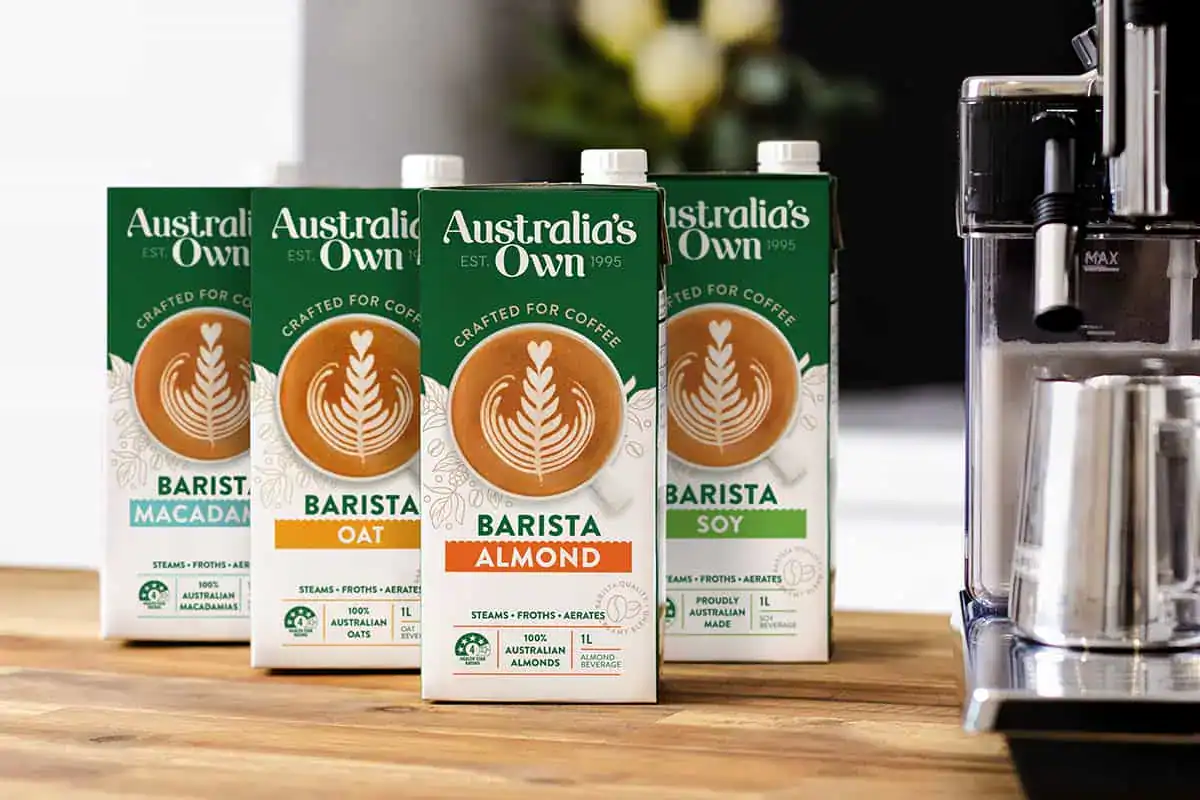
Macadamia milk has a buttery, mildly sweet character that many find the most naturally coffee-friendly of all the nut milks. The catch is availability — barista-format macadamia is harder to find on Australian shelves than oat or soy, and there’s less data on how it froths. MILKLAB and Australia’s Own both make barista macadamia versions, worth trying as an occasional treat rather than your everyday carton.
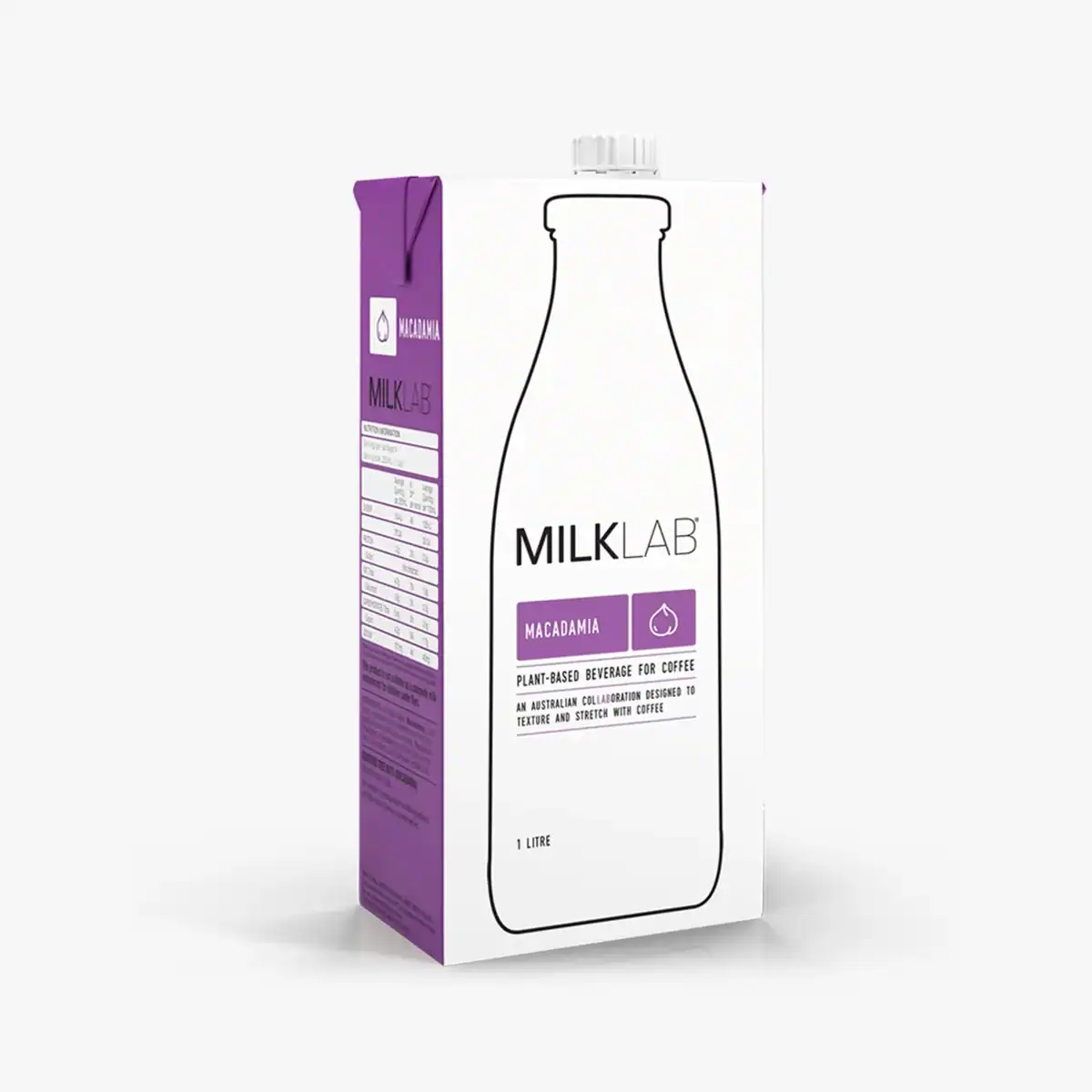
Coconut milk is genuinely divisive on taste, and its frothing behaviour is a bit odd: it can produce surprisingly firm foam when heated, but won’t foam at all cold, so it’s inconsistent across drink types. It’s also more prone to curdling in hot espresso. Alternative Dairy Co’s barista coconut is a reasonable option, but it’s best kept for iced coffee or chai lattes, where the coconut flavour is a feature rather than a distraction.
Nutrition and environmental impact at a glance
Soy leads on protein, which is part of why it froths so well. Oat sits in the mid-range at roughly 0.5–1.1g protein per 100ml depending on the brand, while almond and coconut are both fairly low. Most barista blends are fortified with calcium to levels comparable to dairy (around 120mg per 100ml), so that’s less of a differentiator these days — though the added oils in barista versions do bump up the calorie count slightly compared to standard cartons.
It’s worth saying upfront: every plant-based milk beats dairy here, and it’s not close. Cow’s milk produces roughly 1.1–1.4kg CO2e per litre and uses upwards of 600 litres of water, alongside needing around nine times more land than any plant-based alternative. So even the “worst” plant milk on this list is still a meaningfully lighter choice than dairy — the comparisons below are really about which plant milk to pick, not whether to switch at all.

On footprint within the plant-based category: oat milk is the standout, at roughly 0.45–0.9kg CO2e and around 48 litres of water per litre produced. Soy is similar on carbon (0.7–1.0kg CO2e) and lighter on water, at around 28 litres. Almond’s carbon footprint is comparable to oat’s, but its water use is dramatically higher — around 371 litres per litre of milk, much of it from water-stressed regions. If sustainability matters to you as much as taste, oat and soy are the two to prioritise.
How to froth plant milk at home without it splitting
Keep it simple: steam or heat plant milk to 55–60°C, and don’t push past 65°C. No thermometer? The jug should feel hot but not burning when you hold it briefly — not scientific, but it works. Let your espresso cool for 10–15 seconds before adding milk above 80°C is one of the most common causes of curdling at home.
If you’re using a handheld frother, stick to oat or soy — they hold up better than almond or coconut. If you’re after a dedicated milk frother rather than a steam wand, I’d point you toward Lavazza or Nespresso — both handle barista oat milks like Boring well and are a good starting point if you want café-style foam without a full espresso machine setup.
The verdict
For most people, most of the time, a good barista oat milk is the answer, simple ingredients, steady microfoam, and it doesn’t try to out-talk your espresso. Soy is the close second if you want the most stable foam and don’t mind a slightly beany note. Almond and macadamia are worth exploring for personal taste or specific drinks, and coconut earns its place in iced coffee rather than your morning flat white.
The single biggest upgrade most home coffee drinkers can make is simply switching from standard to barista-edition milk and using a high quality milk frother. Do those two things, and most of the splitting, flat foam and disappointing lattes that give plant-based milk an unfair reputation will disappear. Taste is personal, but the category is far better than most people give it credit for. Enjoy!